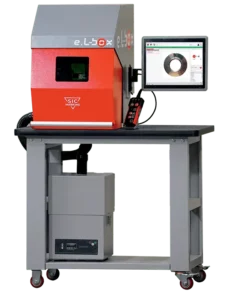
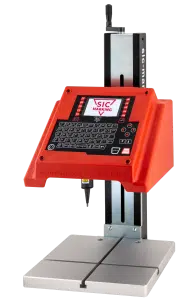
Die Wahl der Kupfer-Markierungstechnologie — Laserbeschriftung, Nadelprägung oder Ritzmarkierung — basiert auf drei messbaren Kriterien: Markierpräzision (Auflösung), erreichte Tiefe sowie mechanische und chemische Beständigkeit der Markierung.
Als hoch wärme- und elektrisch leitfähiges Material weist Kupfer eine starke Reflexion gegenüber Laserstrahlung und eine schnelle Wärmeableitung auf. Diese Eigenschaften beeinflussen direkt die Lasermarkierung, die eine präzise Einstellung der Parameter (Leistung, Pulsdauer, Frequenz) erfordert, um Linienverbreiterungen zu begrenzen und die Lesbarkeit ohne übermäßige Oberflächenveränderung zu erhalten.
Kupferlegierungen (Messing, Bronze, Kupfernickel, CuBe) weisen im Vergleich zu reinem Kupfer eine höhere Härte und eine geringere Duktilität auf. Diese Eigenschaften machen die mechanische Nadelprägung besonders geeignet, um eine dauerhafte gravierte Markierung zu erzielen, vorausgesetzt, das Bauteil verfügt über ausreichende Dicke und Steifigkeit.
Dank seiner vielseitigen Eigenschaften und seiner außergewöhnlichen Recyclingfähigkeit ist Kupfer ein Schlüsselmaterial für die Branchen Energie, Elektronik, Maritim und Medizintechnik.
SIC MARKING bietet Lösungen zur Kupfermarkierung für die permanente Teilekennzeichnung an und kombiniert dabei Lasermarkierung, Nadelprägung und Ritzmarkierung, unter Berücksichtigung der spezifischen thermischen, mechanischen und chemischen Eigenschaften von Kupfer und seinen Legierungen.
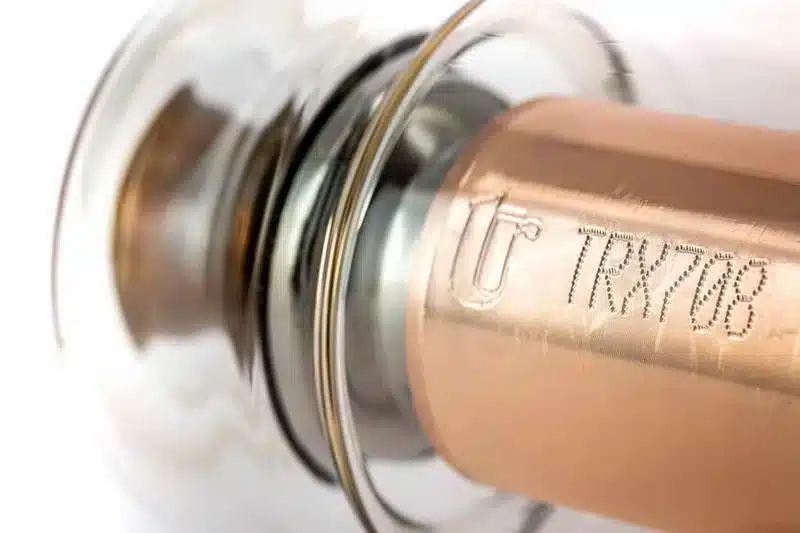
Ob als reines Kupfer oder in Legierungen wie Messing oder Bronze verwendet, erfordert dieses Material aufgrund seiner Duktilität, Laserreflexion und hohen Wärmeleitfähigkeit eine sorgfältige Auswahl der Markierungstechnologie.
Kupfer bietet eine Reihe von Eigenschaften — thermische und elektrische Leitfähigkeit, Duktilität, homogene Oberfläche und Oxidationsneigung — und ist damit eine ausgezeichnete Wahl für die permanente Markierung in industriellen Umgebungen. Seine Oxidationsneigung kann jedoch die Lesbarkeit der Markierung beeinträchtigen, insbesondere unter feuchten Bedingungen.
Lasergravur auf Kupfer wird für feine Markierungen und 2D-Codes empfohlen, wobei die Laserparameter sorgfältig angepasst werden, um die hohe Reflexivität von Kupfer auszugleichen und eine präzise Markierung ohne Beschädigung der Oberfläche zu gewährleisten.
Nadelprägung wird für Anwendungen bevorzugt, die hohen mechanischen Belastungen ausgesetzt sind, und eignet sich besser für Kupferlegierungen, um die Haltbarkeit der Markierung sicherzustellen.
Ritzmarkierung auf Kupfer und Kupferlegierungen wird für strukturelle Kupferbauteile und ästhetische Markierungen empfohlen und erfordert tiefe, gut lesbare Markierungen auf dicken Teilen.
Die Wahl der permanenten Kupfer-Markierungstechnologie hängt vom gewünschten Präzisionsgrad, dem erwarteten Kontrast, der erforderlichen Robustheit sowie vom notwendigen Wärmemanagement ab, um dünne Teile zu erhalten und Oberflächenveränderungen zu vermeiden, insbesondere bei der Lasermarkierung.
Wärmeleitfähigkeit von Kupfer
Geometrie und Dicke des Kupferbauteils
Elektrische Leitfähigkeit
Korrosionsbeständigkeit
Oxidationsneigung
Kupfer ermöglicht eine Vielzahl von permanenten Markierungen — Lasergravur, Nadelmarkierung und Ritzmarkierung — und die Wahl der Markierungstechnologie hängt vom gewünschten Detailgrad, der Gravurtiefe oder der Beständigkeit ab.
Die auf Kupfer und Kupferlegierungen erzielbaren Markierungsarten reichen von Mikromarkierungen (10–50 µm) bis zu Tiefenmarkierungen (50–200 µm), wobei jede Markierungstechnik spezifische Anforderungen erfüllt:
Die Wahl der Kupfermarkierungstechnologie ergibt sich aus einem Kompromiss zwischen gewünschter grafischer Feinheit, erforderlicher mechanischer Tiefe, langfristiger Kontraststabilität und dem durch das Material vorgegebenen Wärmemanagement.
Jeder Prozess — Laser, Nadelmarkierung (auch Mikropercussion oder Dot-Peen) oder Ritzmarkierung — erfüllt somit je nach Einsatzumgebung und funktionalen Anforderungen des Bauteils unterschiedliche industrielle Anforderungen.
Branchen wie Mikroelektronik, Medizintechnik, Automobil, Luft- und Raumfahrt, Energie, Schienenverkehr und Luxusgüter bestimmen die Wahl des Codes (DMC, QR, Barcodes, Seriennummern, Referenzmarken, Piktogramme) entsprechend den Anforderungen an Lesbarkeit, Rückverfolgbarkeit und Beständigkeit.
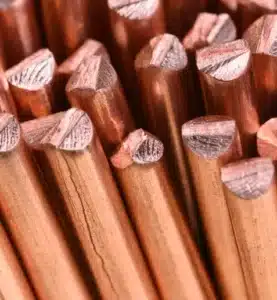
Bei der Implementierung eines Datamatrix ECC200 auf Kupfer oder Kupferlegierungen zielen Hersteller auf eine Modulgröße ab, die mit dem Lesegerät kompatibel ist.
Lasermarkierung ermöglicht feine Markierungen und hochdichte Mikrocodes, geeignet für Anwendungen, die hohe Auflösung und optimalen Kontrast erfordern.
Nadelmarkierung (auch Dot-Peen oder Mikropercussion genannt) erzeugt tiefe Punkte (von 0,1 bis 0,3 mm) und bietet ausgezeichnete mechanische und chemische Beständigkeit, wodurch sie sich besonders für anspruchsvolle industrielle Umgebungen eignet.
Im Gegensatz dazu wird Ritzmarkierung für DataMatrix-Codes im Allgemeinen vermieden, da sie nicht fein genug ist und nur begrenzt in der Lage ist, hochdichte, lesbare Codes zu erzeugen, insbesondere auf kleinen, detaillierten Oberflächen, die für Mikrocodes erforderlich sind.
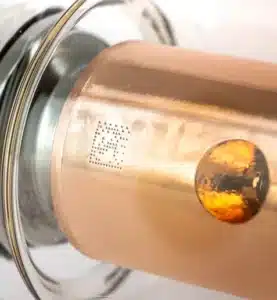
In vielen industriellen Umgebungen wird der QR-Code aufgrund seiner Fähigkeit gewählt, URLs und Metadaten zu speichern, sowie wegen seiner schnellen Lesbarkeit, insbesondere auf Produktionslinien.
In der Produktion liefert die Lasergravur auf Kupfer eine saubere und präzise Markierung, ideal für Anwendungen, die hochdichte Codes und feine Auflösung erfordern, insbesondere für QR-Codes und DataMatrix-Codes.
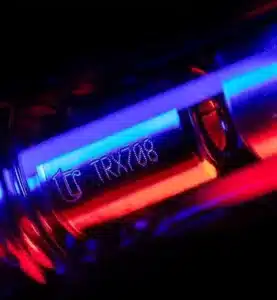
Für die Seriennummernkennzeichnung wird die Faserlasergravur von Kupfer oder Kupferlegierungen aufgrund ihrer Präzision und Geschwindigkeit bevorzugt: Sie ermöglicht typische Zeichengrößen von 0,5 bis 2,0 mm mit Auflösungen, die für OCR und Kameraerkennung ausreichend sind.
Abhängig von der Kupferlegierung und dem Oberflächenzustand basiert die Lasermarkierung von Seriennummern auf lokaler thermischer Wechselwirkung, entweder durch kontrollierte Ablation oder Oberflächenoxidation. Diese Markierungsmethode bietet einen lesbaren Kontrast ohne mechanische Verformung des Bauteils, vorausgesetzt, die Laserparameter sind präzise eingestellt.
Die Nadelmarkierung wird empfohlen, wenn die mechanische Beständigkeit entscheidend ist: Sie erreicht kontrollierte Tiefen von 50 bis 150 µm und widersteht Vibrationen sowie aggressiver Reinigung.
Die Ritzmarkierung wird bei massiven Kupferteilen bevorzugt, wenn Tiefen von 100 bis 200 µm und sofortige Lesbarkeit angestrebt werden, insbesondere in Fällen, in denen Oxidation oder Oberflächenbehandlungen die Sichtbarkeit flacher Markierungen verringern könnten.

Die Lasermarkierung bleibt die bevorzugte Lösung in der Produktion für einen sauberen und durchgehend lesbaren 1D-Barcode, insbesondere für gängige Symbologien wie Code 128 oder Code 39, aufgrund ihrer Geschwindigkeit, Präzision und Anpassungsfähigkeit an Materialien wie Kupfer und dessen Legierungen.

Dank der Faserlaser-Technologie ist es möglich, extrem feinen Text auf Kupfer zu erzielen: Mikromarkierungen von 10 bis 50 µm für medizinische UDIs oder Pad-Anzeigen, sowie Zeichen, die von Kameras ab einer Höhe von ca. 0,2 mm gelesen werden können.
Die Lasermarkierung erzeugt Kontrast durch Oxidation oder kontrollierte Ablation, während Nadelprägung Tiefen von 50 bis 150 µm für überlegene mechanische Beständigkeit erreicht, ideal für Anwendungen, die hohe Verschleiß- und Belastungsresistenz erfordern.
Für funktionale Kennzeichnungen liegen die typischen Zeichenhöhen beim Nadelprägen zwischen 1,5 und 4 mm.
Beim Ritzmarkieren werden Gravurtiefen von 50 bis 200 µm erreicht, insbesondere auf massiven Kupferteilen, die Abrieb ausgesetzt sind.
In der Produktion wird die Lasermarkierung für feine Linien und schnelle Ausführung bevorzugt, während Industrien auf Nadelmarkierung oder Ritzmarkierung zurückgreifen, wenn Beständigkeit in rauen Umgebungen und mechanische Haltbarkeit der Markierung Priorität haben.

Die hochauflösende Faserlaserbeschriftung ermöglicht extrem feine Logos, mit Mikromarkierungen von 10 bis 50 µm und Linienbreiten, die in der Regel zwischen 20 und 50 µm liegen.
Diese Art der Kupfermarkierung bietet ein ästhetisches Finish, das besonders für die Branchen Luxus und Präzisionselektronik geeignet ist, und ist die bevorzugte Lösung, wann immer ein Piktogramm Regelmäßigkeit und Kontrast erfordert, ohne die Geometrie des Kupferteils zu verändern.
In rauen Umgebungen liefert die Nadelmarkierung (Dot-Peen) ein hoch lesbares technisches Finish: Punkte von 0,2 bis 0,5 mm, Abstand von 0,25 bis 0,5 mm und Tiefen von 50 bis 150 µm, was optimale mechanische Beständigkeit und Lesbarkeit selbst bei Oxidation gewährleistet.
Die Ritzmarkierung wird für robuste dekorative Anwendungen oder technische Markierungen eingesetzt, bei denen eine Tiefe von mehr als 50 µm (bis zu 200 µm) erforderlich ist, obwohl ihr gröberes Finish sie weniger für feine Linien geeignet macht.
Permanente Kupfermarkierung erfüllt regulatorische und Qualitätsanforderungen, indem sie eine eindeutige Identifikation gewährleistet (Seriennummer, Datamatrix, QR-Code), die Einhaltung von Automobil-, Luftfahrt-, Medizintechnik– und Energie-Standards sowie Produktionsverfolgung und digitale Archivierung.
Sie garantiert zuverlässiges automatisches Lesen, online oder offline, und schützt die Rückverfolgbarkeit kritischer Kupferteile während der Fertigung.
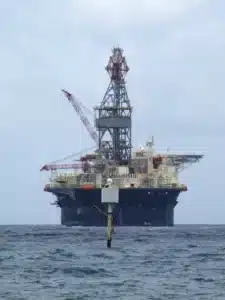
Die vollständige Palette der Materialeigenschaften leitet die Wahl der Legierungen – Messing, Bronze, CuNi, CuBe – und erklärt die vorherrschenden Einsatzbereiche von Kupfer und Kupferlegierungen in den Bereichen Elektrik und Elektronik, Automobil, Luftfahrt, Energie, der Maritimen Industrie, Ventile & Armaturen (oft Bronze-Teile, bei denen Seriennummern mit Piktogrammen zur Flussrichtung markiert werden), sowie im Medizintechniksektor.



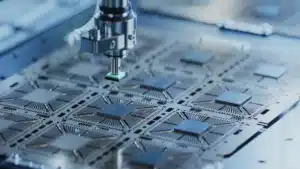

Entdecken Sie unsere Flaggschiffgeräte für Laserbeschriftung, Mikropercussion oder Gravur, einschließlich tragbarer Maschinen, integrierbarer Module für Produktionslinien oder eigenständiger Markierungsstationen.
Kontakt
Brauchen Sie weitere Informationen?
Nehmen Sie Kontakt mit einem unserer Experten auf!